Office Move Planning Checklist: A Week-by-Week Guide for Essex Businesses
A good office move is invisible to your customers and quick for your staff. A bad one means downtime, missing kit and a Monday morning of chaos. The difference is almost always planning, started early enough to be calm rather than frantic.
This guide gives you a week-by-week timeline and a checklist you can copy straight into your own planner. It covers the survey, IT, staff communication, furniture, storage, access and the move-day plan, in the order a business in Essex would actually tackle them.
How early should you start?
For a typical small to medium office, give yourself 8 to 12 weeks. That is enough time to survey the job, plan the layout, sort the IT and keep staff in the loop without a scramble at the end.
Larger offices, or moves with a lot of IT, specialist equipment or a phased handover, need longer. The single biggest cause of a stressful office move is starting too late, so if in doubt, begin sooner.
The week-by-week office move checklist
Copy the table below into a shared document and assign an owner to each line. Clear ownership is what stops tasks slipping through the gaps.
| Timeframe | Key tasks | Owner |
|---|---|---|
| 8–12 weeks before | Appoint a move lead, set the budget, review the new lease and access, and book a commercial removals survey. | |
| 6 weeks before | Confirm the quote and move date, plan the new floor layout, audit furniture and equipment, brief your IT provider on the tech move, and decide what to keep, store or dispose of. | |
| 4 weeks before | Tell staff and assign responsibilities, order any new furniture, book IT engineers, arrange storage if needed, and start updating your address with HMRC, Companies House, your bank, website and Google Business Profile. | |
| 2 weeks before | Confirm the schedule and labelling plan, back up all data, order crates and packing materials, check your insurance, and brief staff to pack their own desks. | |
| Move week | Pack non-essentials, label everything to the floor plan, confirm access and parking at both ends, and prepare a first-day essentials box. | |
| Move day | Supervise against the inventory, get IT set up and tested, check nothing is left behind, and do a final walk of the old space. | |
| After the move | Test everything and log any snags, finish the remaining address updates, and gather staff feedback. |
When you update your address, remember the official records as well as the obvious ones. You can tell HMRC about a change to your business online, and Companies House will need your registered office updated too.
IT and downtime: the part that bites
For most businesses, the real risk in a move is not the desks, it is the technology. Servers, phones, broadband and workstations all need to come down in the right order and go back up tested, ideally before anyone tries to work on Monday.
Bring your IT provider in early, ideally at the 6-week mark. Agree who disconnects and reconnects what, when the new broadband and phone lines go live, and how data is backed up before anything is unplugged. Where you can, schedule the physical move over a weekend or a quiet period so systems are tested and ready before staff return.
Furniture, storage and access
Two practical things decide how smoothly the day runs: what you are taking, and whether the vehicle can get near the door. An honest furniture and equipment audit is worth doing early, because moving things you are about to replace is wasted money.
If your new premises are not ready, you are downsizing, or you are phasing the move, commercial storage gives you somewhere to stage furniture, archives and equipment. Confirm access at both ends too, including loading bays, lifts, parking and any time restrictions on the building, so the crew is not held up on the day.
Your move-day plan
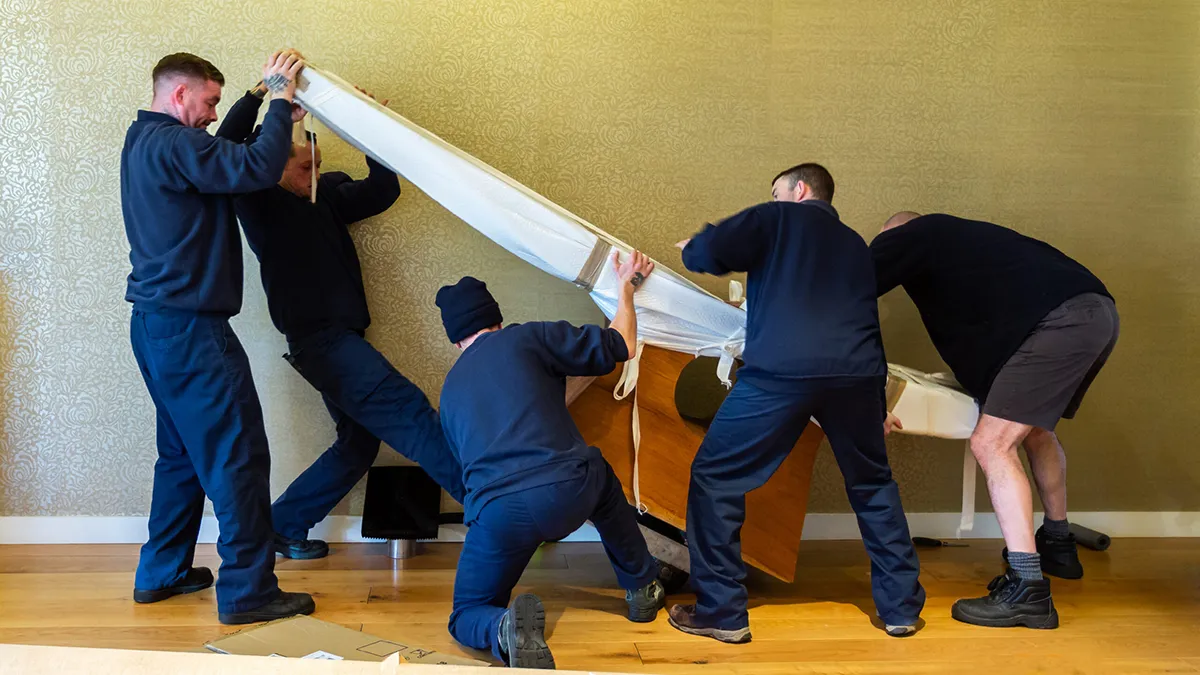
On the day, one person should own the floor and work from a single plan. Every item and box should be labelled to a room or desk on the new layout, so the crew places things correctly rather than dumping them in a pile.
Keep a short inventory to check against, set up and test the IT first, and have a first-day essentials box ready with the things staff need immediately. A calm, supervised day is almost always the result of the planning you did weeks earlier.
How Move It handles office moves
Our business relocation service is built around keeping you working. We start with a technical survey of your current space, build a relocation plan around your operating hours, and handle office furniture dismantling and reassembly, IT and equipment, and archived documents, before positioning everything in your new premises so your team can get back to work quickly.
We regularly move offices, commercial units and industrial premises across South Essex, at whatever scale you need. You can see the full service on our commercial and office removals pages and the dedicated business relocation service, and the survey is free.
Frequently asked questions
Planning a move? Let’s talk
An office move rewards early planning more than almost any other kind. Get the survey booked, the IT sorted and the checklist owned, and the day itself becomes routine.
Tell us about your premises, your timeline and roughly what you are moving, and we will arrange a free survey and a clear, written quote.